9 Best Agent Skills for Training a Better AI Agent
Discover 9 open-source AI agent skills that help agents learn faster, debug better, integrate tools, and complete tasks more reliably.
Installing dozens of Agent Skills won't necessarily make your AI agent better. In fact, many skills solve highly specific problems that you may never encounter, while a handful improve almost every agent workflow—from debugging and verification to tool integration and autonomous learning. Choosing the right skills often has a much bigger impact than simply installing more of them.
To help you cut through the noise, we reviewed the most widely adopted open-source Agent Skills from Anthropic's official repository and leading community projects. The result is this list of nine high-impact skills that consistently improve reliability, reasoning quality, and developer productivity when building AI agents.
If you're wondering which Agent Skills to install first, start here.
Quick Comparison
| Skill | Primary Purpose | Best For |
|---|---|---|
| Skill Creator | Create and evaluate new skills | Building custom skills |
| MCP Builder | Build MCP servers | Tool integration |
| Writing Skills | Writing high-quality skills | Skill authors |
| Webapp Testing | Browser validation | Web agents |
| Verification Before Completion | Output verification | All coding agents |
| Systematic Debugging | Root cause analysis | Software engineering |
| Dispatching Parallel Agents | Parallel task execution | Multi-agent workflows |
| Test-Driven Development | Reliable software development | Coding agents |
| Receiving Code Review | Handling review feedback | Collaborative workflows |
How We Selected These Skills
We evaluated dozens of publicly available Agent Skills before narrowing the list to nine recommendations. Our selection was based on four criteria.
- Practical Value: Every skill should solve a recurring problem that AI agents commonly encounter in production, rather than demonstrating a niche capability.
- Reusability: We prioritized skills that can be applied across different projects, models, and agent frameworks instead of being tightly coupled to a single implementation.
- Quality of Documentation: A good skill should clearly explain when it should be invoked, how it works, and what resources it depends on. Well-structured SKILL.md files significantly improve adoption.
- Production Readiness: Finally, we favored skills maintained by reputable open-source projects with evidence of real-world usage, including Anthropic's official Skills repository and Prime Radiant's Superpowers collection.
9 Best Agent Skills for Training a Better AI Agent
Skill Creator
Repo: https://github.com/anthropics/skills/tree/main/skills/skill-creator
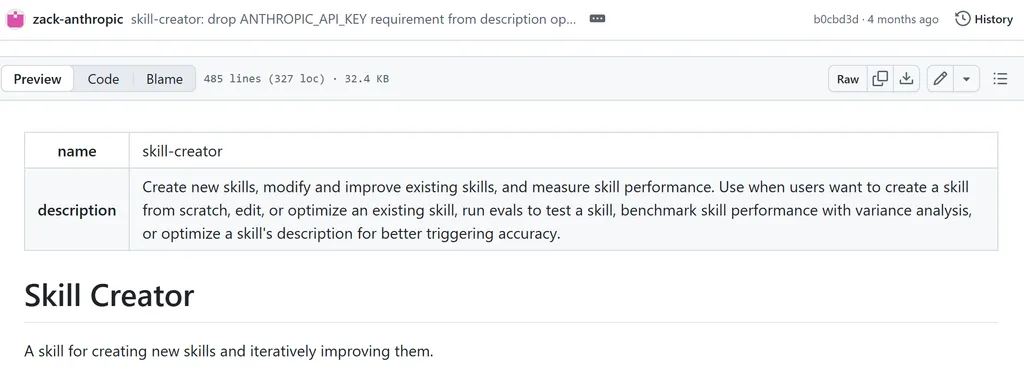
It's a skill for making skills. Given a rough idea of a capability you want an agent to have, it walks through drafting the SKILL.md, generating realistic test cases, running the agent with and without the skill in parallel to measure the difference, and grading the results — including a blind A/B comparison mode when you want to check whether a revised version is actually better than the last one. It's what lets an agent's set of capabilities grow through iteration instead of manual prompt engineering from scratch each time.
Why it's great: Unlike most Agent Skills that teach a single workflow, Skill Creator teaches an agent how to improve itself. Once installed, it becomes the foundation for building and iterating on every other custom skill, making it one of the few skills whose value compounds over time.
Trade-offs: It offers little immediate value for end-user tasks. Teams looking for coding, research, or browser automation capabilities should install those skills first, then use Skill Creator to refine and benchmark them over time.
MCP Builder
Repo: https://github.com/anthropics/skills/tree/main/skills/mcp-builder
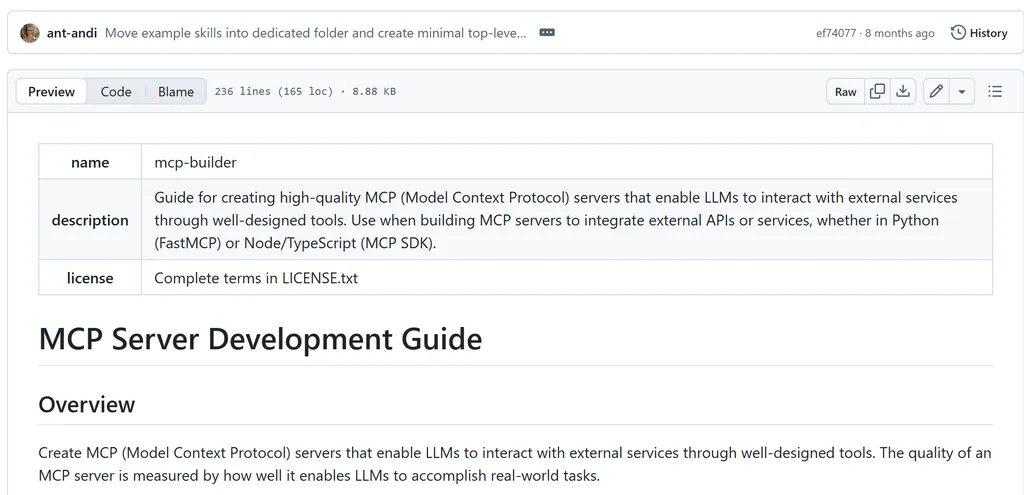
Guides an agent through building a well-designed MCP (Model Context Protocol) server — the standard way agents connect to external APIs and services. It covers the parts that are easy to get wrong: naming tools so they're easy to discover, balancing full API coverage against convenient workflow-specific tools, writing error messages that actually help the agent recover, and generating realistic evaluation questions to test whether the server holds up under real use.
Why it's great: Most MCP tutorials focus on getting a server running. MCP Builder goes further by emphasizing discoverability, tool design, evaluation, and long-term maintainability, making it particularly valuable for production environments.
Trade-offs: It's primarily useful for developers building new MCP servers. If you're only consuming existing MCP tools, you probably won't invoke this skill often.
Writing Skills
Repo: https://github.com/obra/superpowers/tree/main/skills/writing-skills
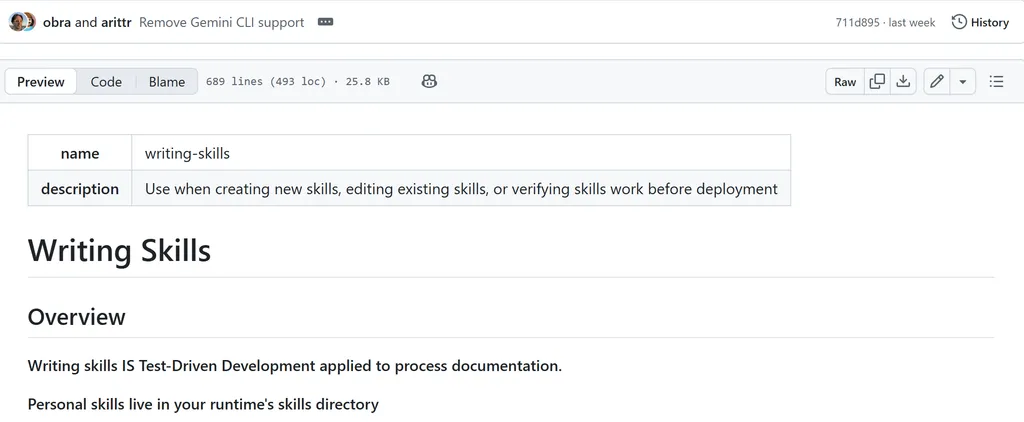
A meta-skill for writing other skills well, from a framework built by Jesse Vincent's team at Prime Radiant. Its core principle is that skill-writing should follow the same discipline as test-driven development: establish a baseline failure first, write the skill, then test against a no-guidance control with enough repetitions to know the wording actually changed behavior rather than just reading well. It also documents common failure patterns — like a skill's short description silently overriding more detailed instructions later in the file — collected from real production use.
Why it's great: Unlike Skill Creator, which focuses on generating new skills, Writing Skills concentrates on improving the quality of the skill itself. It introduces repeatable writing patterns, testing methodology, and common pitfalls that significantly increase the chances a skill behaves consistently.
Trade-offs: It's mainly relevant for authors creating custom skills rather than day-to-day agent execution.
Webapp Testing
Repo: https://github.com/anthropics/skills/tree/main/skills/webapp-testing
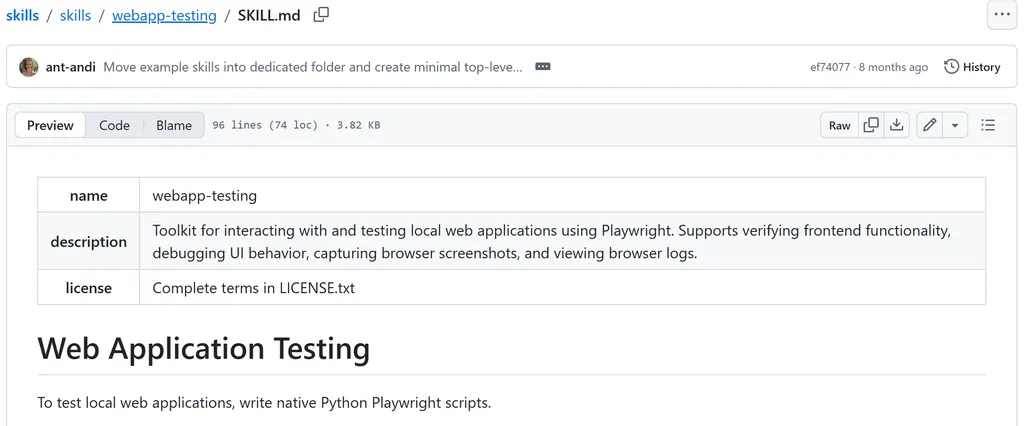
Gives an agent a reliable pattern for testing a local web app using Playwright: wait for the network to settle, take a screenshot, identify the actual selectors present, then act — rather than guessing at page structure or acting before the page has finished loading.
Why it's great: Rather than teaching browser automation in general, this skill focuses on making browser interactions reliable. By enforcing wait states, screenshot verification, and selector discovery, it dramatically reduces flaky behavior in UI testing.
Trade-offs: The skill assumes access to Playwright and a controllable browser environment, making it less useful for agents operating in text-only workflows.
Verification Before Completion
Repo: https://github.com/obra/superpowers/tree/main/skills/verification-before-completion
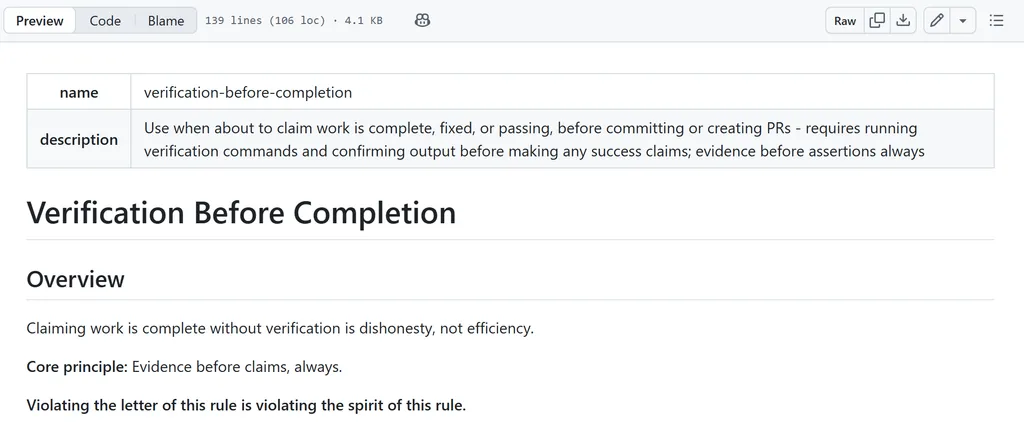
Addresses a specific, common failure mode: an agent declaring a task done because the code looks right, without actually confirming the fix works. This skill enforces checking real output against the actual requirement before claiming completion.
Why it's great: This is arguably the highest-ROI skill for coding agents. Many agent failures happen not because the solution is wrong, but because it was never verified. Installing this skill immediately improves reliability across almost every engineering workflow.
Trade-offs: It adds additional execution time because verification becomes mandatory, which may be unnecessary for exploratory or low-risk tasks.
Systematic Debugging
Repo: https://github.com/obra/superpowers/tree/main/skills/systematic-debugging
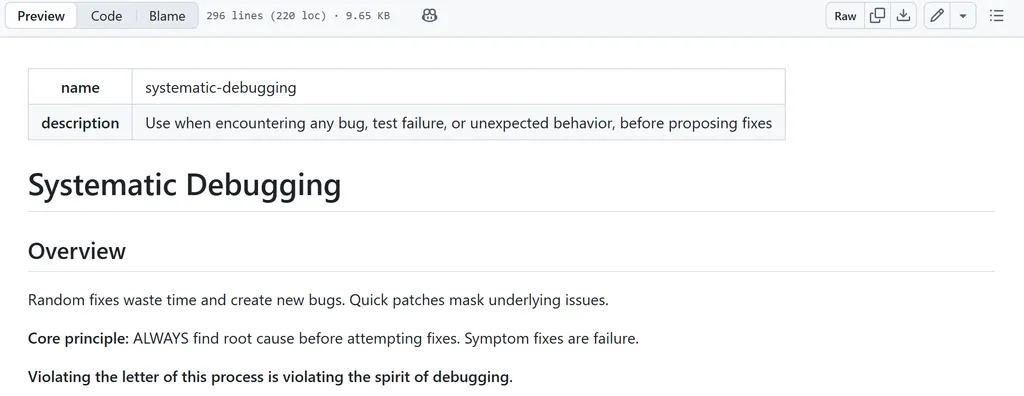
A structured four-phase process for finding a bug's actual root cause rather than pattern-matching to a plausible-looking fix: gather evidence about where the failure occurs, trace backward through component boundaries to isolate it, form a hypothesis, then verify before considering it resolved. It also has an explicit rule for when three fixes in a row haven't worked — stop and question the architecture rather than trying a fourth patch.
Why it's great: Most agents default to trial-and-error debugging. This skill forces evidence collection before proposing fixes, resulting in fewer hallucinated diagnoses and more reproducible solutions.
Trade-offs: The structured workflow can feel slower for simple bugs that an experienced developer could fix immediately.
Dispatching Parallel Agents
Repo: https://github.com/obra/superpowers/tree/main/skills/dispatching-parallel-agents
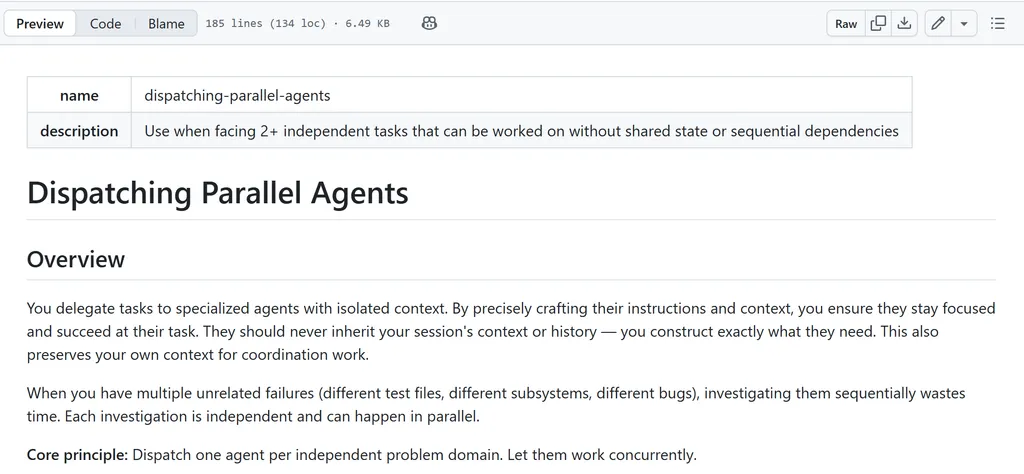
Covers how to split a task across multiple subagents running concurrently rather than one agent working through steps sequentially — including how to structure the handoff so each subagent has enough context to work independently and results merge cleanly afterward.
Why it's great: Parallel execution is one of the most effective ways to reduce latency for complex workflows. This skill provides a reusable strategy for decomposing work without sacrificing coordination.
Trade-offs: Not every task benefits from parallelism. Highly dependent workflows may actually become more complex when split across multiple subagents.
Test-Driven Development
Repo: https://github.com/obra/superpowers/tree/main/skills/test-driven-development
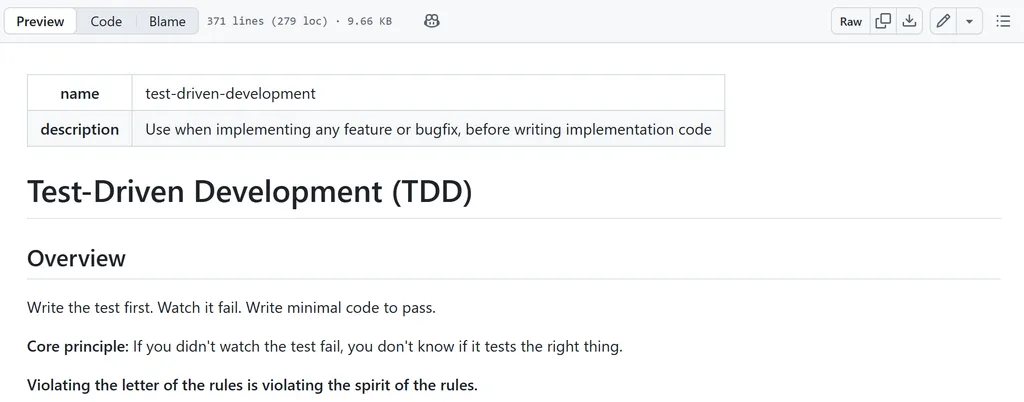
Enforces a red-green-refactor discipline: write a failing test first, write the minimum code to pass it, then refactor — rather than writing implementation code first and testing as an afterthought (or not at all). The skill is explicit about this being a hard rule rather than a preference, with the reasoning laid out for why code written before its test tends not to stick.
Why it's great: Unlike generic coding skills, this one changes the development process itself. By enforcing a test-first workflow, it improves long-term code quality rather than simply generating implementations faster.
Trade-offs: The upfront investment is higher, making it less attractive for quick prototypes or throwaway scripts.
Receiving Code Review
Repo: https://github.com/obra/superpowers/tree/main/skills/receiving-code-review
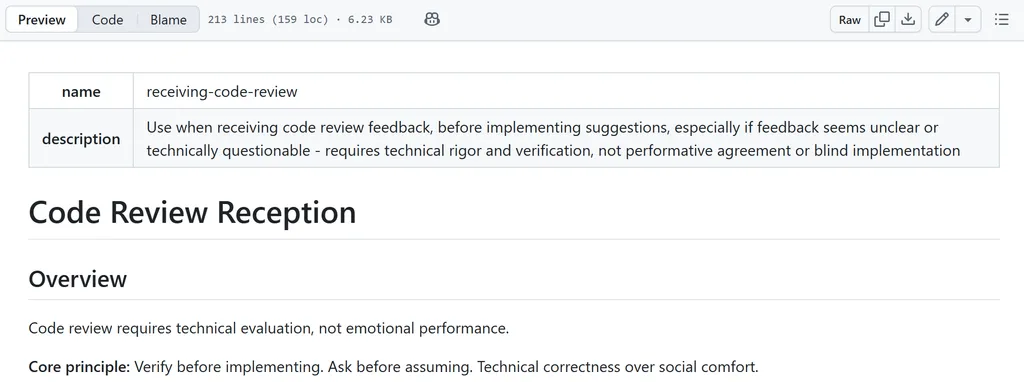
Covers how an agent should actually respond to review feedback — distinguishing between feedback that requires a real fix versus feedback that's a matter of style, and avoiding the common failure of either ignoring valid criticism or over-correcting on every comment regardless of merit.
Why it's great: Many coding agents treat review comments as commands. This skill teaches an agent to evaluate feedback critically, distinguishing actionable issues from stylistic preferences instead of blindly applying every suggestion.
Trade-offs: Its value depends on review actually being part of your development workflow. Solo-agent systems may rarely invoke it.
FAQ
What is an Agent Skill?
An Agent Skill is a reusable capability package that teaches an AI agent how to perform a specific task. Unlike prompts, skills can include structured instructions, helper scripts, examples, and additional resources that are loaded only when relevant.
Are Agent Skills the same as frameworks like LangChain?
Not really.
Frameworks such as LangChain, CrewAI, or AutoGen provide the infrastructure for building agents. Agent Skills define how an agent should accomplish individual tasks within those frameworks.
Do I need all nine skills?
Not necessarily.
Most developers will benefit from starting with Skill Creator, Verification Before Completion, and Systematic Debugging. Additional skills can be added as your agent's responsibilities become more specialized.
Can these skills be customized?
Yes.
Because they're distributed as open-source repositories, you can modify the instructions, examples, and supporting resources to match your own workflows or domain-specific requirements.
Will Agent Skills replace prompt engineering?
Probably not.
Instead, they complement prompt engineering by moving reusable workflows out of prompts and into modular, maintainable packages that can evolve independently.