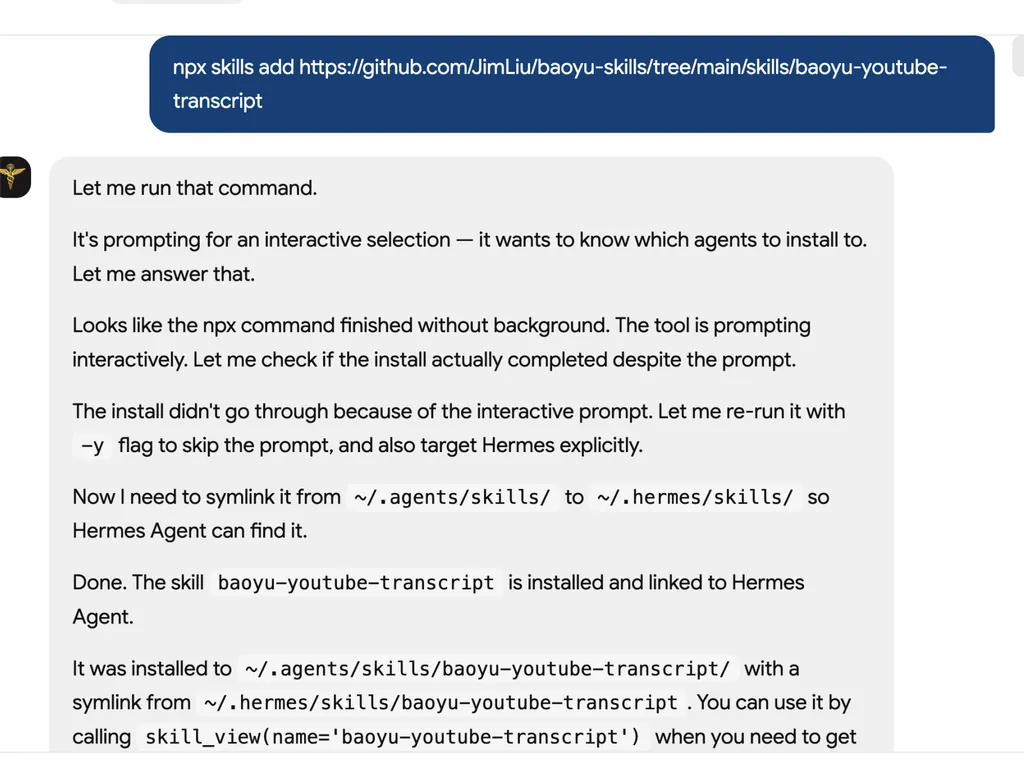
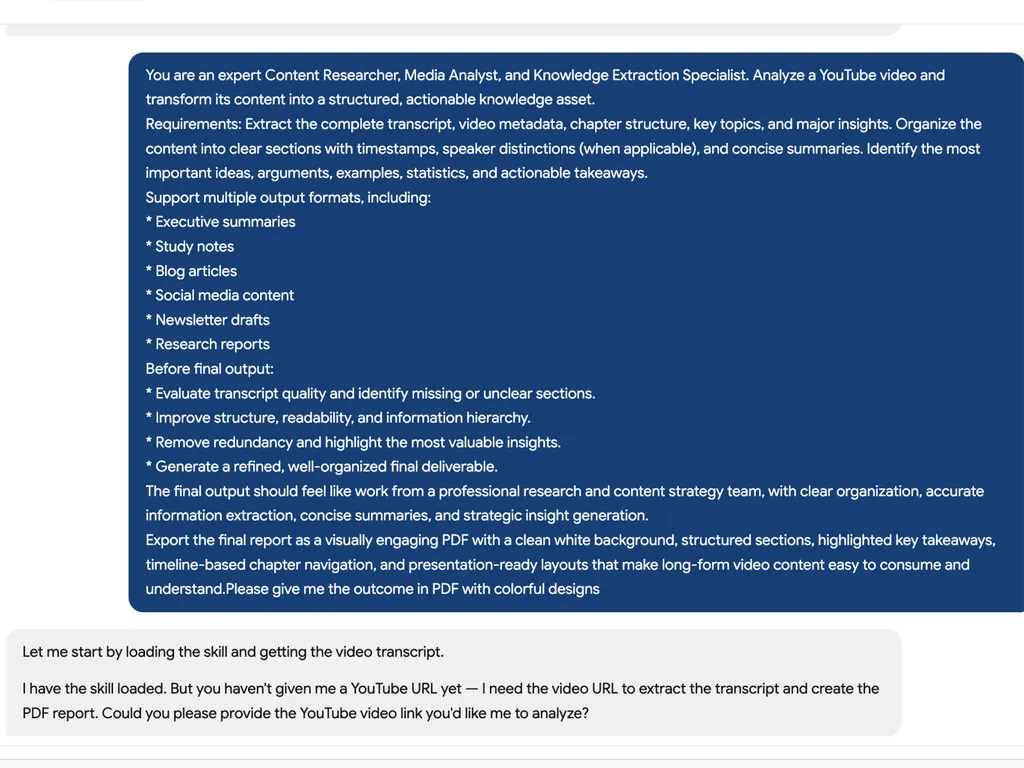
YouTube Transcript
Downloads transcripts (subtitles/captions) from YouTube videos. Works with both manually created and auto-generated transcripts. No API key or browser required — uses YouTube's InnerTube API directly and automatically falls back to yt-dlp when YouTube blocks the direct API path.
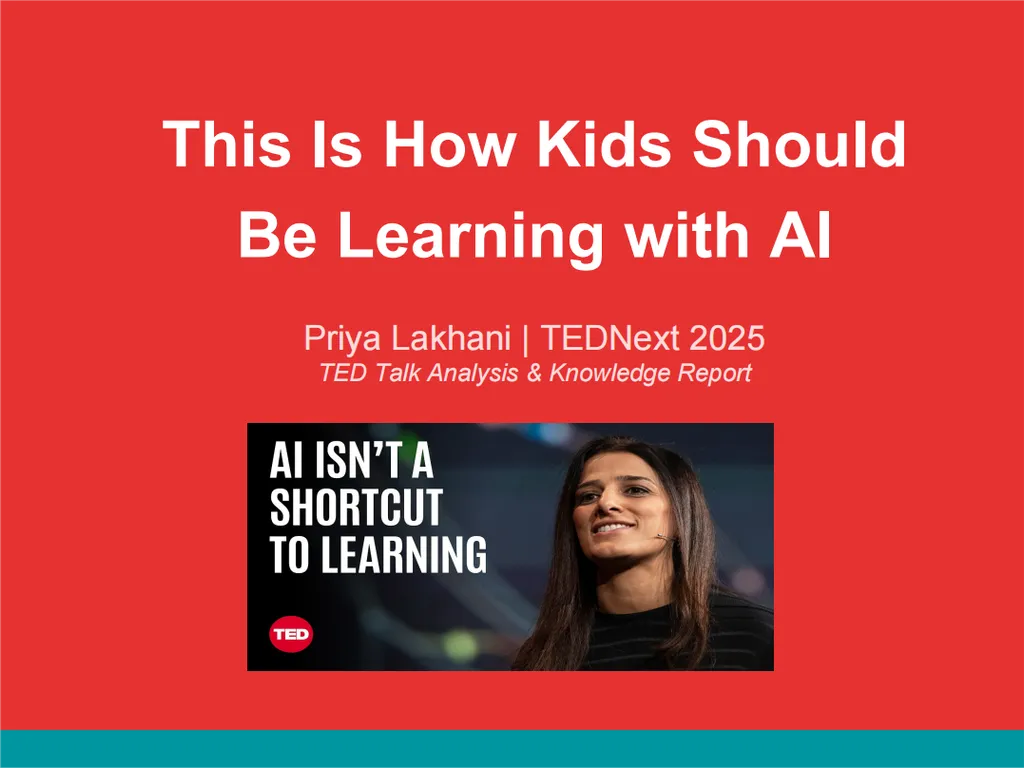
Fetches video metadata and cover image on first run, caches raw data for fast re-formatting.
Script Directory
Scripts in scripts/ subdirectory. {baseDir} = this SKILL.md's directory path. Resolve ${BUN_X} runtime: if bun installed → bun; if npx available → npx -y bun; else suggest installing bun. Replace {baseDir} and ${BUN_X} with actual values.
| Script | Purpose |
|---|---|
scripts/main.ts | Transcript download CLI |
Usage
# Default: markdown with timestamps (English)
${BUN_X} {baseDir}/scripts/main.ts <youtube-url-or-id>

# Specify languages (priority order)
${BUN_X} {baseDir}/scripts/main.ts <url> --languages zh,en,ja

# Without timestamps
${BUN_X} {baseDir}/scripts/main.ts <url> --no-timestamps

# With chapter segmentation
${BUN_X} {baseDir}/scripts/main.ts <url> --chapters

# With speaker identification (requires AI post-processing)
${BUN_X} {baseDir}/scripts/main.ts <url> --speakers

# SRT subtitle file
${BUN_X} {baseDir}/scripts/main.ts <url> --format srt

# Translate transcript
${BUN_X} {baseDir}/scripts/main.ts <url> --translate zh-Hans

# List available transcripts
${BUN_X} {baseDir}/scripts/main.ts <url> --list

# Force re-fetch (ignore cache)
${BUN_X} {baseDir}/scripts/main.ts <url> --refresh
Options
| Option | Description | Default |
|---|---|---|
<url-or-id> | YouTube URL or video ID (multiple allowed) | Required |
--languages <codes> | Language codes, comma-separated, in priority order | en |
--format <fmt> | Output format: text, srt | text |
--translate <code> | Translate to specified language code | |
--list | List available transcripts instead of fetching | |
--timestamps | Include [HH:MM:SS → HH:MM:SS] timestamps per paragraph | on |
--no-timestamps | Disable timestamps | |
--chapters | Chapter segmentation from video description | |
--speakers | Raw transcript with metadata for speaker identification | |
--exclude-generated | Skip auto-generated transcripts | |
--exclude-manually-created | Skip manually created transcripts | |
--refresh | Force re-fetch, ignore cached data | |
-o, --output <path> | Save to specific file path | auto-generated |
--output-dir <dir> | Base output directory | youtube-transcript |
Optional Environment Variables
| Variable | Description |
|---|---|
YOUTUBE_TRANSCRIPT_COOKIES_FROM_BROWSER | Passed to yt-dlp --cookies-from-browser during fallback, e.g. chrome, safari, firefox, or chrome:Profile 1 |
Input Formats
Accepts any of these as video input:
- Full URL:
https://www.youtube.com/watch?v=dQw4w9WgXcQ - Short URL:
https://youtu.be/dQw4w9WgXcQ - Embed URL:
https://www.youtube.com/embed/dQw4w9WgXcQ - Shorts URL:
https://www.youtube.com/shorts/dQw4w9WgXcQ - Video ID:
dQw4w9WgXcQ
Output Formats
| Format | Extension | Description |
|---|---|---|
text | .md | Markdown with frontmatter (incl. description), title heading, summary, optional TOC/cover/timestamps/chapters/speakers |
srt | .srt | SubRip subtitle format for video players |
Output Directory
youtube-transcript/
├── .index.json                          # Video ID → directory path mapping (for cache lookup)
└── {channel-slug}/{title-full-slug}/
    ├── meta.json                        # Video metadata (title, channel, description, duration, chapters, etc.)
    ├── transcript-raw.json              # Raw transcript snippets from YouTube API (cached)
    ├── transcript-sentences.json        # Sentence-segmented transcript (split by punctuation, merged across snippets)
    ├── imgs/
    │   └── cover.jpg                    # Video thumbnail
    ├── transcript.md                    # Markdown transcript (generated from sentences)
    └── transcript.srt                   # SRT subtitle (generated from raw snippets, if --format srt)
{channel-slug}: Channel name in kebab-case{title-full-slug}: Full video title in kebab-case
The --list mode outputs to stdout only (no file saved).
Caching
On first fetch, the script saves:
meta.json— video metadata, chapters, cover image path, language infotranscript-raw.json— raw transcript snippets from YouTube API ({ text, start, duration }[])transcript-sentences.json— sentence-segmented transcript ({ text, start: "HH:mm:ss", end: "HH:mm:ss" }[]), split by sentence-ending punctuation (.?!…。?!etc.), timestamps proportionally allocated by character length, CJK-aware text mergingimgs/cover.jpg— video thumbnail
Subsequent runs for the same video use cached data (no network calls). Use --refresh to force re-fetch. If a different language is requested, the cache is automatically refreshed.
When YouTube returns anti-bot / blocked responses on the direct InnerTube path, the script retries with alternate client identities and then falls back to yt-dlp if available. If fallback is needed but yt-dlp is unavailable, the agent should decide how to make yt-dlp available and continue rather than pushing the installation decision to the user.
SRT output (--format srt) is generated from transcript-raw.json. Text/markdown output uses transcript-sentences.json for natural sentence boundaries.
Workflow
When user provides a YouTube URL and wants the transcript:
- Run with
--listfirst if the user hasn't specified a language, to show available options - Always single-quote the URL when running the script — zsh treats
?as a glob wildcard, so an unquoted YouTube URL causes "no matches found": use'https://www.youtube.com/watch?v=ID' - Default: run with
--chapters --speakersfor the richest output (chapters + speaker identification) - The script auto-saves cached data + output file and prints the file path
- For
--speakersmode: after the script saves the raw file, follow the speaker identification workflow below to post-process with speaker labels
When user only wants a cover image or metadata, running the script with any option will also cache meta.json and imgs/cover.jpg.
When re-formatting the same video (e.g., first text then SRT), the cached data is reused — no re-fetch needed.
Chapter & Speaker Workflow
Chapters (--chapters)
The script parses chapter timestamps from the video description (e.g., 0:00 Introduction), segments the transcript by chapter boundaries, groups snippets into readable paragraphs, and saves as .md with a Table of Contents. No further processing needed.
If no chapter timestamps exist in the description, the transcript is output as grouped paragraphs without chapter headings.
Speaker Identification (--speakers)
Speaker identification requires AI processing. The script outputs a raw .md file containing:
- YAML frontmatter with video metadata (title, channel, date, cover, description, language)
- Video description (for speaker name extraction)
- Chapter list from description (if available)
- Raw transcript in SRT format (pre-computed start/end timestamps, token-efficient)
After the script saves the raw file, spawn a sub-agent (use a cheaper model like Sonnet for cost efficiency) to process speaker identification:
- Read the saved
.mdfile - Read the prompt template at
{baseDir}/prompts/speaker-transcript.md - Process the raw transcript following the prompt:
- Identify speakers using video metadata (title → guest, channel → host, description → names)
- Detect speaker turns from conversation flow, question-answer patterns, and contextual cues
- Segment into chapters (use description chapters if available, else create from topic shifts)
- Format with
**Speaker Name:**labels, paragraph grouping (2-4 sentences), and[HH:MM:SS → HH:MM:SS]timestamps
- Overwrite the
.mdfile with the processed transcript (keep the YAML frontmatter)
When --speakers is used, --chapters is implied — the processed output always includes chapter segmentation.
Error Cases
| Error | Meaning |
|---|---|
| Transcripts disabled | Video has no captions at all |
| No transcript found | Requested language not available |
| Video unavailable | Video deleted, private, or region-locked |
| IP blocked | Too many requests, try again later |
| Age restricted | Video requires login for age verification |
| bot detected | The script retries alternate clients and then yt-dlp; if fallback tooling is missing, the agent should resolve that itself, otherwise if it still fails try YOUTUBE_TRANSCRIPT_COOKIES_FROM_BROWSER=safari (or your browser) |