8 Best Report Agent Skills Ranked and Reviewed in 2026
Discover the best report agent skills for AI-powered report generation. Learn how leading agents turn complex data into actionable insights.
Introduction
AI report agents have evolved far beyond simple text generation. The best report-focused Skills can now conduct research, verify sources, synthesize evidence, generate insights, and produce publication-ready reports with minimal human intervention.
To identify the most capable options available today, we tested a range of report-generation Skills across real-world reporting tasks, including market research, competitive analysis, academic-style reports, and executive summaries.
In this guide, you'll find:
- Our evaluation methodology
- Detailed testing results
- Strengths and weaknesses of each Skill
- Best use cases for different reporting needs
- What the future of AI report agents looks like
Quick Comparison Table
| Skill | Role Type | Data Source | Core Srength | Best for |
|---|---|---|---|---|
| Reports | Management | Files & Categories | Organizing reports | Report storage & retrieval |
| Report Writer | Formatter | Existing content | Structuring reports | Executive formatting |
| Report Writing | Generator | Multi-source (KB + convo) | Full report creation | End-to-end reporting |
| ReportLab Pre-Defined Styles Reference | Infrastructure | Templates | PDF styling stability | Report rendering |
| Reporter | Data Reporter | Databases | Query → insights | BI dashboards |
| Lark Workflow Standup Report | Workflow Reporter | Calendar + Tasks | Real-time summaries | Daily standups |
| GWS Workflow Standup Report | Workflow Reporter | Calendar + Tasks | Simple automation | Team status reports |
| GWS Admin Reports | Enterprise Reporter | Audit logs | System-level insights | Compliance & analytics |
Top Report Agent Skills Reviewed
1. Reports
Overview
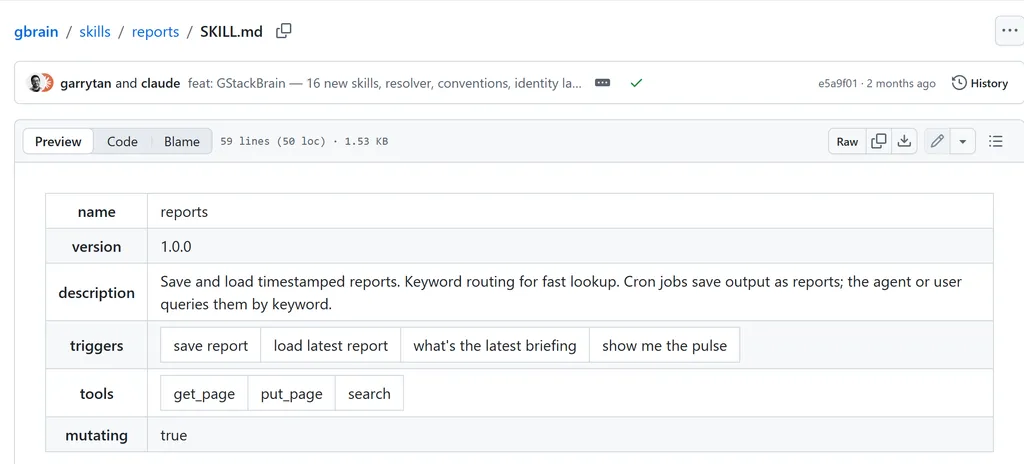
Reports Skill is a report management system designed to organize, store, retrieve, and route reports throughout their lifecycle. Instead of generating content itself, it ensures that reports remain searchable, consistently categorized, and easy to access over time.
The Skill automatically saves reports using timestamped filenames and standardized metadata, allowing teams to build a structured knowledge repository rather than a collection of disconnected documents. Through keyword-based routing, users can retrieve the latest report without remembering exact file paths or category names.
For organizations generating reports on a recurring basis, Reports Skill acts as the foundation that keeps reporting workflows organized and scalable.
What It Does Well
- Creates a structured report archive with standardized metadata.
- Makes reports searchable and retrievable through category-based routing.
- Automatically maintains report version history through timestamped files.
- Reduces friction when locating the latest report in a workflow.
- Supports long-term knowledge management and documentation practices.
Where It Falls Short
- Does not generate reports or perform analysis.
- Lacks research, validation, and reasoning capabilities.
- Depends heavily on consistent category naming conventions.
- Provides infrastructure rather than business insights.
- Delivers little value without complementary reporting Skills.
Best For:
- Report management
- Knowledge repositories
- Recurring reporting workflows
- Documentation systems
Final Verdict
Reports Skill is best viewed as a report management layer rather than a report creation tool. While it contributes little to research or analysis, it solves an equally important problem: keeping reports organized, searchable, and maintainable at scale.
For teams producing recurring reports, this Skill provides the infrastructure needed to prevent information loss and reporting chaos. It is not the most intelligent reporting Skill in the evaluation, but it is one of the most practical for long-term report operations.
2. Report Writer
Overview
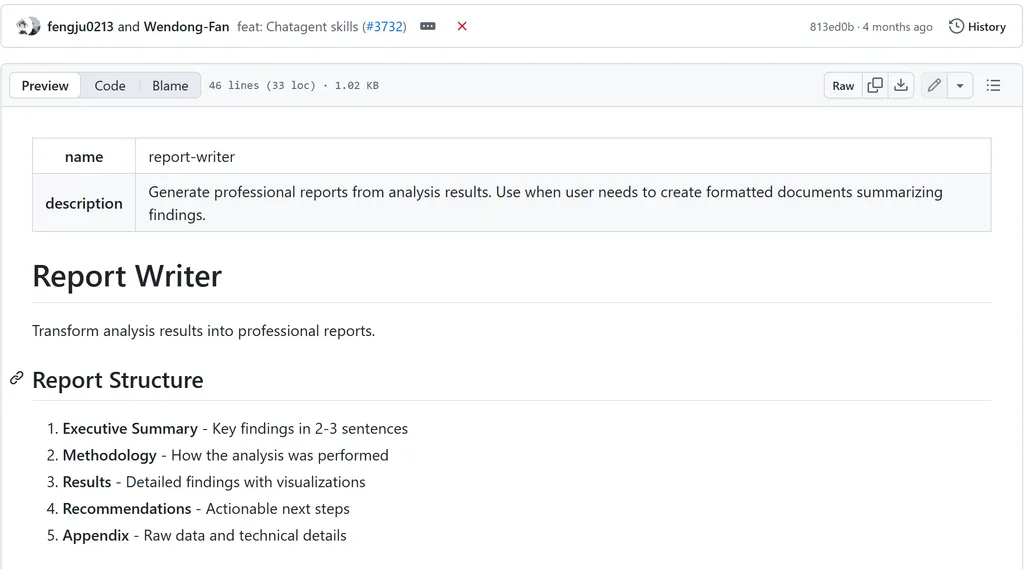
Report Writer is a formatting-focused Skill that transforms analytical outputs into professional reports. Rather than conducting research or generating new insights, it takes existing findings and restructures them into a standardized business reporting format.
The Skill follows a predefined framework consisting of an Executive Summary, Methodology, Results, Recommendations, and Appendix. This structure helps ensure consistency across reports and makes analytical findings easier for stakeholders to consume.
Its greatest strength is presentation. It turns raw outputs into polished documents suitable for business, consulting, and executive audiences.
What It Does Well
- Produces highly professional report structures.
- Creates clear executive summaries and recommendation sections.
- Improves readability through concise formatting rules.
- Maintains a consistent reporting style across outputs.
- Makes analytical findings easier to present to decision-makers.
Where It Falls Short
- Does not perform research or data collection.
- Generates no additional insights beyond provided content.
- Relies entirely on the quality of upstream analysis.
- Offers limited flexibility outside its predefined structure.
- Functions primarily as a formatting tool.
Best For:
- Executive reports
- Business summaries
- Consulting deliverables
- Professional report formatting
Final Verdict
Report Writer excels at one thing: transforming analytical content into polished, stakeholder-ready reports. It is not a research assistant, analyst, or reasoning engine. Instead, it serves as the final presentation layer of the reporting process.
Organizations that already have strong data analysis workflows will benefit from its ability to standardize report quality and improve readability. However, users seeking deeper research or insight generation will need to pair it with more capable upstream Skills.
3. Report Writing
Overview
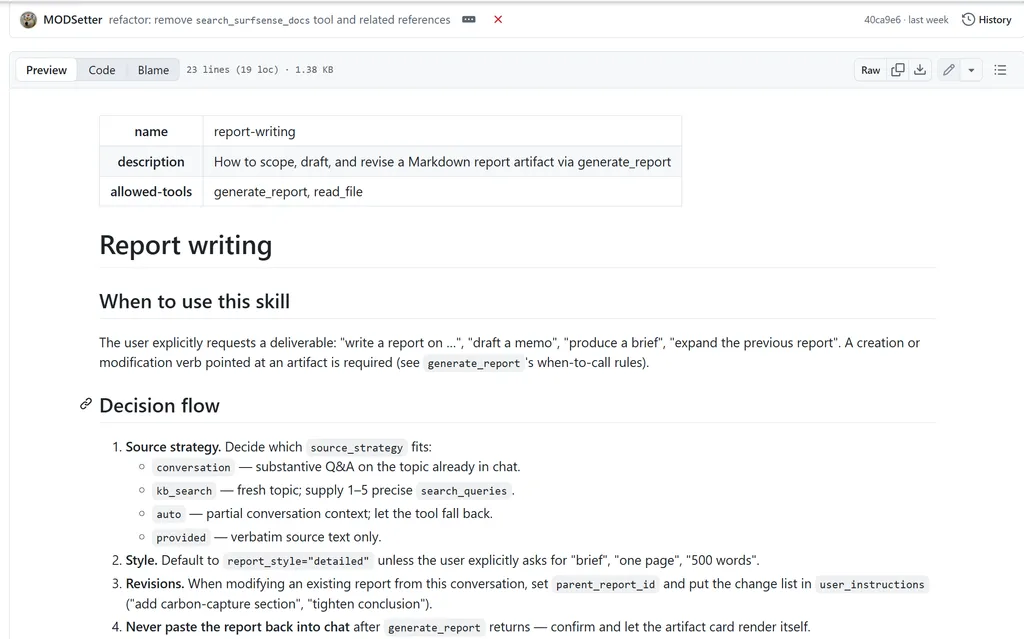
Report Writing is the most complete report-generation Skill among the three evaluated. Unlike report management or formatting tools, it introduces a full workflow for creating reports from multiple information sources.
The Skill can dynamically determine whether content should be generated from conversation history, knowledge-base search results, user-provided material, or a combination of sources. It also supports report revisions through parent-child report relationships, enabling iterative improvements over time.
By combining source selection, report generation, and revision management, Report Writing functions as a true report creation engine rather than a simple writing assistant.
What It Does Well
- Supports multiple source acquisition strategies.
- Generates reports directly from conversations, knowledge bases, or provided materials.
- Handles report revisions through structured version tracking.
- Adapts report length and detail level based on user requirements.
- Provides a complete end-to-end report creation workflow.
Where It Falls Short
- Source quality depends heavily on retrieval accuracy.
- Less specialized in formatting than dedicated report-writing tools.
- May produce inconsistent outputs when source strategies are poorly selected.
- Lacks advanced citation and verification mechanisms.
- Requires more configuration than simpler report-generation Skills.
Best For:
- End-to-end report generation
- Knowledge-base reporting
- Research briefs
- Iterative report drafting
- AI-powered reporting workflows
Final Verdict
Report Writing stands out as the strongest report-generation Skill in this comparison. Its ability to select information sources, generate reports, and manage revisions gives it significantly broader functionality than either Reports Skill or Report Writer.
Rather than focusing on a single stage of the reporting process, it orchestrates the entire workflow from information retrieval to final document creation. While it may not offer the strongest formatting or storage capabilities individually, it provides the most balanced combination of research, writing, and iterative refinement.
For users seeking a standalone reporting agent rather than a supporting utility, this is currently the most capable option among the first three Skills evaluated.
4. ReportLab Pre-Defined Styles Reference
Overview
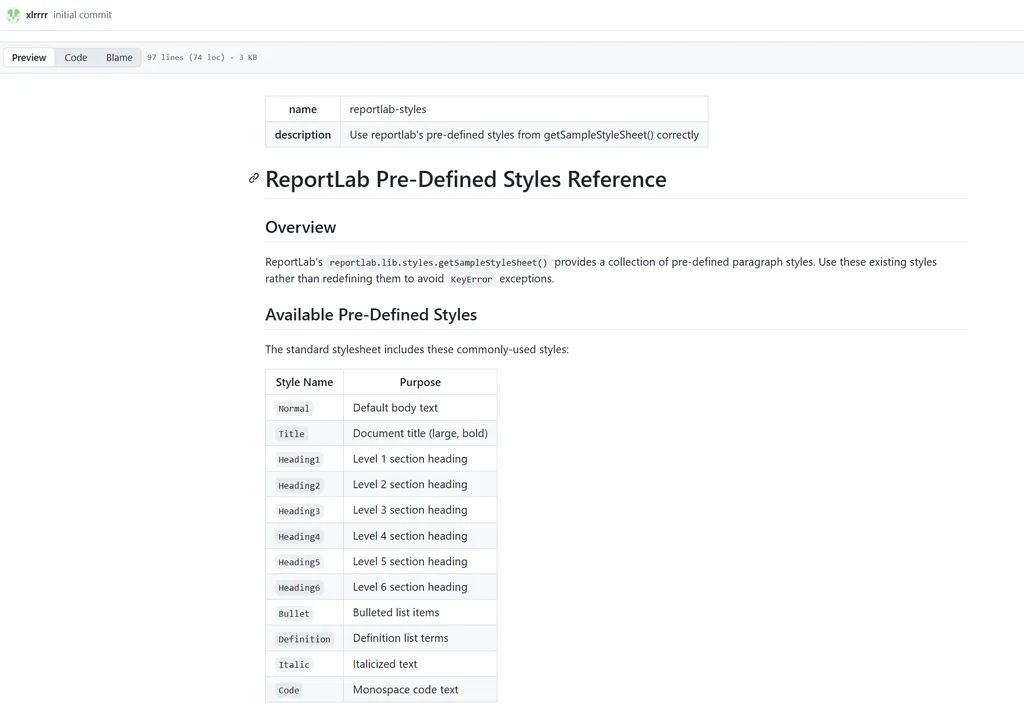
ReportLab Pre-Defined Styles Reference is a document-rendering Skill that standardizes PDF styling in ReportLab-based reporting workflows. Its primary purpose is to prevent styling conflicts and rendering failures by enforcing the correct use of ReportLab's built-in stylesheet system.
Rather than contributing to research, analysis, or report generation, it focuses on ensuring that reports are visually consistent and technically stable when exported as PDFs.
In a reporting pipeline, this Skill operates at the final presentation layer.
What It Does Well
- Prevents ReportLab styling conflicts and rendering errors.
- Promotes reusable and maintainable document templates.
- Encourages best practices for custom style creation.
- Improves consistency across generated reports.
- Reduces debugging time in PDF-generation workflows.
Where It Falls Short
- Does not generate report content.
- Provides no analytical or research capabilities.
- Limited to ReportLab-based environments.
- Offers little value outside PDF generation workflows.
- Functions more as documentation than an intelligent Skill.
Best For:
- PDF report generation
- Report template systems
- ReportLab workflows
- Document rendering pipelines
Final Verdict
ReportLab Pre-Defined Styles Reference is essentially a report infrastructure utility. While it contributes little to intelligence or reporting quality, it plays a useful role in ensuring that generated documents remain stable and visually consistent.
For developers building automated PDF reporting systems, it serves as a practical safeguard. For most report-generation users, however, its impact is relatively limited.
5.Reporter
Overview
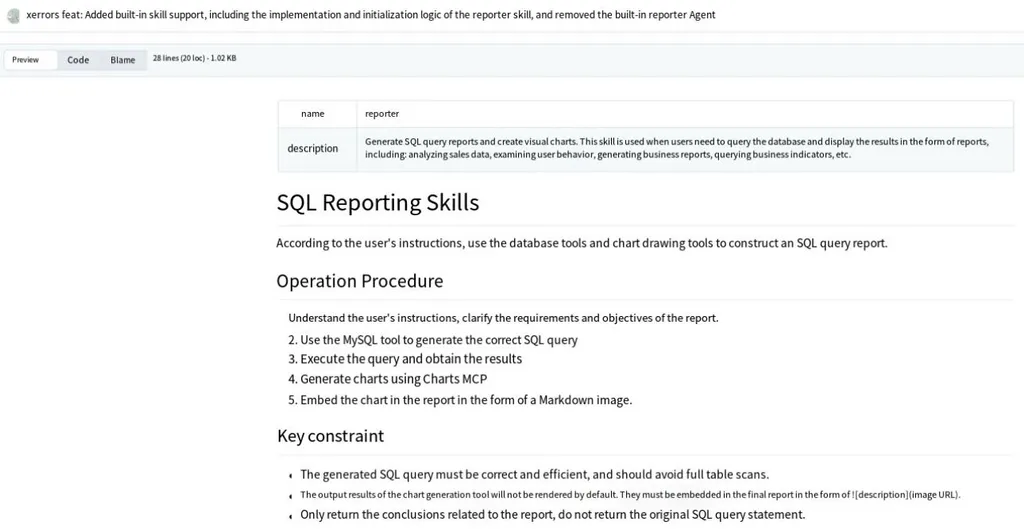
SQL Reporting Skill is a data-reporting agent that converts user requirements into SQL queries, executes them against databases, visualizes the results, and produces business-friendly reports.
Unlike traditional report-writing Skills, it operates directly on structured data sources, bridging the gap between databases and stakeholder-facing reports.
This makes it one of the most complete data-reporting workflows in the evaluation.
What It Does Well
- Automates the full query-to-report process.
- Connects directly to business data sources.
- Generates charts and visualizations automatically.
- Produces concise report conclusions instead of exposing raw SQL.
- Reduces manual work in recurring analytics workflows.
Where It Falls Short
- Report quality depends heavily on database quality.
- Limited source diversity outside SQL systems.
- Weak citation and verification mechanisms.
- Analytical insights are often descriptive rather than strategic.
- Complex queries may require manual optimization.
Best For:
- BI reporting
- KPI dashboards
- Data analytics
- Database-driven reports
Final Verdict
SQL Reporting Skill is one of the strongest reporting Skills for data-driven organizations. By combining database access, visualization, and report generation, it automates a workflow that would normally require multiple tools and significant analyst effort.
While it lacks the broader research capabilities of knowledge-based report agents, its ability to transform raw business data into decision-ready reports makes it highly valuable in operational and analytics environments.
6. Lark Workflow Standup Report
Overview
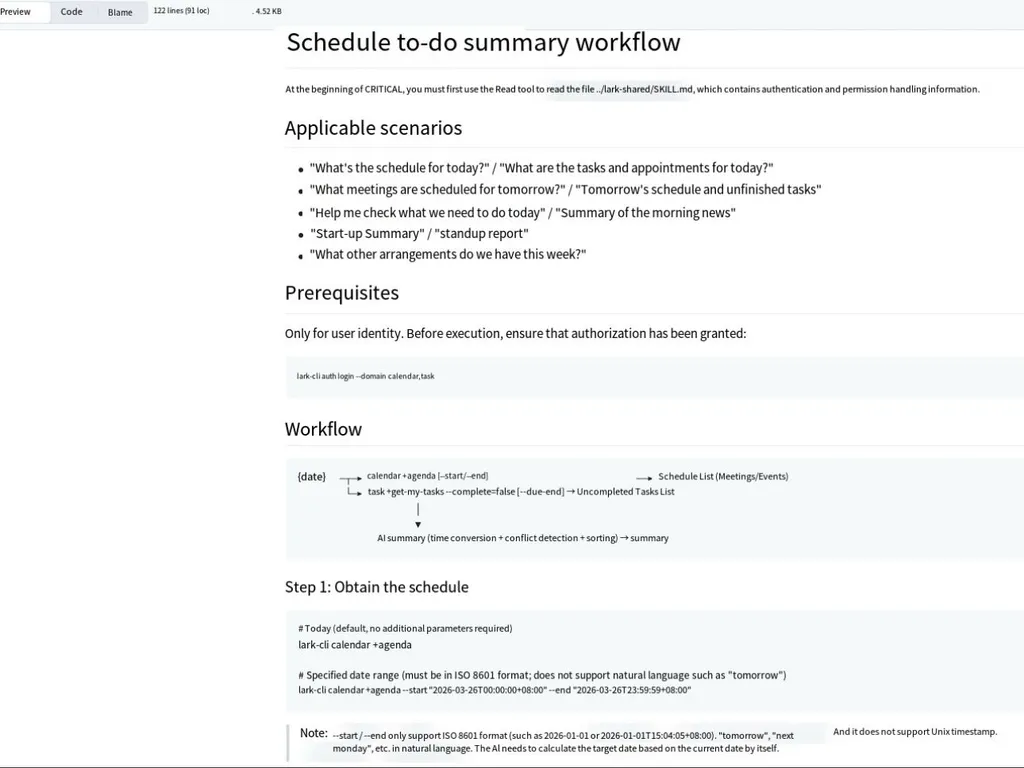
Lark Workflow Standup Report is an operational reporting Skill that combines calendar events and task lists into daily or weekly standup summaries. It automatically gathers meetings, incomplete tasks, scheduling conflicts, and available time slots to create actionable productivity reports.
Rather than generating business research reports, it focuses on helping teams understand what needs attention today.
What It Does Well
- Automatically consolidates meetings and tasks.
- Detects scheduling conflicts.
- Highlights workload and availability.
- Generates useful standup summaries.
- Uses live productivity data instead of static inputs.
Where It Falls Short
- Limited strategic analysis.
- Primarily useful inside Lark ecosystems.
- Minimal citation support.
- Focused on operational reporting rather than business reporting.
- Limited customization beyond standup workflows.
Best For:
- Daily standup reports
- Team status updates
- Meeting and task summaries
- Productivity and workflow management
- Operational reporting within Lark environments
Final Verdict
Lark Workflow Standup Report excels at operational visibility. By aggregating meetings, tasks, and scheduling information into a single view, it reduces the overhead associated with daily planning and team coordination.
It is not designed for research-heavy reporting, but for workflow reporting it is one of the strongest Skills evaluated.
7. GWS Workflow Standup Report
Overview
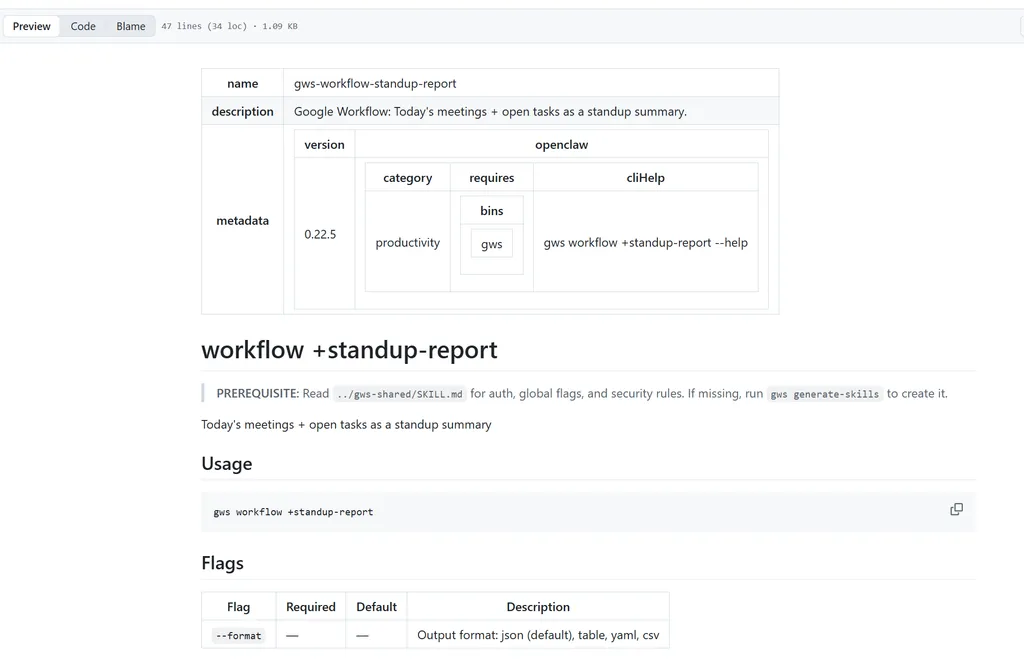
GWS Workflow Standup Report performs a similar role to the Lark version but within the Google Workspace ecosystem. It generates daily summaries by combining Google Calendar events and open Google Tasks into a single report.
Its emphasis is on simplicity, automation, and visibility.
What It Does Well
- Pulls data directly from Google Workspace.
- Supports multiple output formats.
- Automates recurring status updates.
- Requires minimal manual input.
- Fits naturally into Google-centric workflows.
Where It Falls Short
- Less sophisticated scheduling intelligence than the Lark version.
- Limited analytical capabilities.
- Dependent on accurate task management habits.
- Narrow use-case scope.
- Provides summaries rather than insights.
Best For:
- Google Workspace teams
- Daily reporting
- Task tracking
- Status updates
Final Verdict
GWS Workflow Standup Report is a highly practical reporting assistant for Google Workspace users. It removes the friction of assembling daily updates and ensures teams remain informed about meetings and outstanding work.
Although less feature-rich than some workflow intelligence tools, it delivers exactly what most teams need from a standup reporting workflow.
8. GWS Admin Reports
Overview
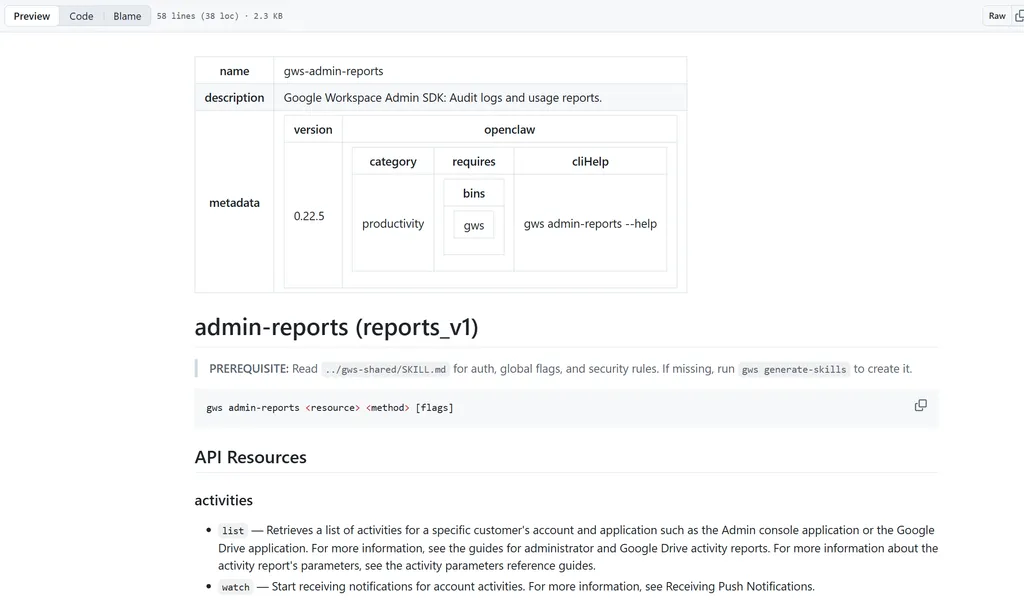
GWS Admin Reports is an enterprise reporting Skill built on the Google Workspace Admin SDK Reports API. It provides access to audit logs, activity records, customer usage reports, entity usage reports, and user-level analytics.
Unlike standup reporting Skills, this one operates at the organizational level, making it useful for compliance, governance, security monitoring, and operational reporting.
What It Does Well
- Direct access to authoritative audit logs.
- Enterprise-scale reporting coverage.
- Strong compliance and governance support.
- Supports operational monitoring.
- Provides highly trustworthy reporting data.
Where It Falls Short
- Requires administrative privileges.
- Complex setup and authentication.
- Limited executive narrative generation.
- Geared toward technical users.
- Often requires complementary visualization tools.
Best For:
- Compliance reporting
- Security audits
- Enterprise analytics
- Operational monitoring
- IT governance
Final Verdict
GWS Admin Reports is the strongest enterprise reporting Skill in the current evaluation. Its access to first-party audit and usage data gives it a level of reliability that few other Skills can match.
While it is not designed for storytelling or executive communication, it provides an exceptional foundation for compliance reporting, security investigations, and operational analytics.
How We Evaluated Report Agent Skills
Across all eight Report Agent Skills, a clear pattern emerged: they do not compete in a single dimension, but instead operate at different layers of the reporting stack—from infrastructure and formatting to real-time data reporting and enterprise analytics.
Instead of treating this as a uniform comparison, we evaluated each Skill based on its overall contribution to a complete reporting workflow, including data access, automation depth, and practical usability in real-world reporting scenarios.
While each skill serves a distinct purpose, the evaluation revealed that three skills consistently stand out across different usage contexts.
Overall Top 3 Report Agent Skills
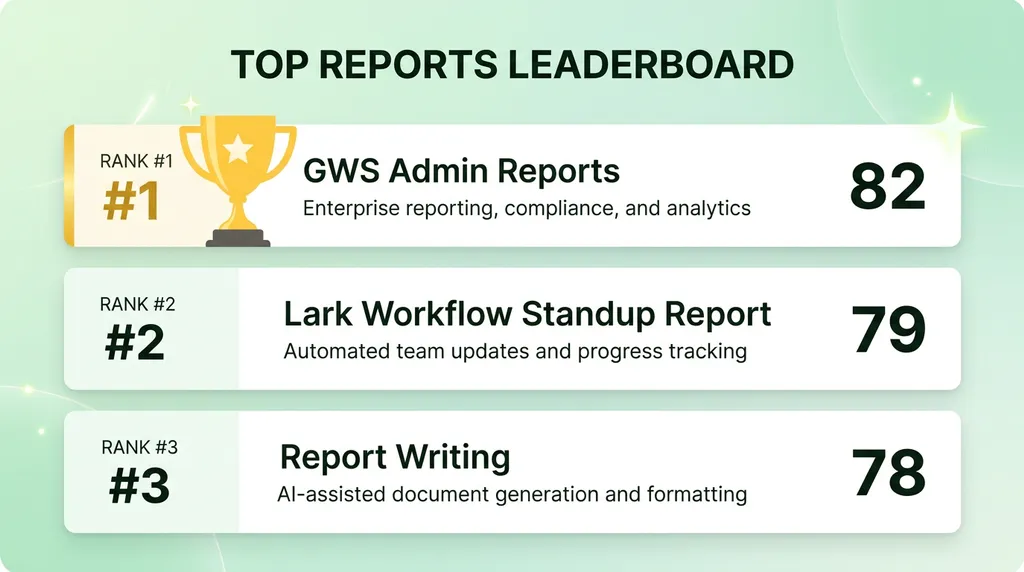
🥇 1. GWS Admin Reports
Best for: Enterprise reporting, compliance, and analytics
This Skill ranks highest due to its access to authoritative enterprise-level data, including audit logs, usage metrics, and system activity. It provides the most reliable foundation for compliance reporting, security monitoring, and organizational intelligence.
🥈 2. Lark Workflow Standup Report
Best for: Daily productivity and team operations
This Skill excels in real-time operational reporting, combining calendar events and task data into structured daily or weekly standups. It is highly effective for team coordination and workflow visibility.
🥉 3. Report Writing
Best for: End-to-end report generation and research workflows
Unlike formatting or management tools, this Skill supports a complete reporting pipeline—from source selection to report generation and revision. It is the most balanced Skill for general-purpose report creation.
Evaluation Criteria
Rather than relying on a single metric, we assessed Skills using a compact set of dimensions:
- Data Access Quality (static files vs live systems vs enterprise logs)
- Automation Depth (manual steps vs full pipeline automation)
- Workflow Coverage (single-stage vs end-to-end reporting)
- Practical Usability (real-world applicability in business or operations)
These criteria were used to understand where each skill sits in the reporting lifecycle, rather than simply how well it writes text.
Key Insight
The evaluation shows a clear separation:
- Some Skills optimize structure (formatting & management)
- Some optimize generation (writing & synthesis)
- The strongest skills optimize real-world data + workflow automation
This is why the top performers are not writing-focused tools, but system-level reporting agents connected to live data sources.
Overall, the best Report Agent Skills are not defined by writing quality, but by how close they operate to real operational or enterprise data. These three represent the most complete coverage of real-world reporting needs.
FAQ
What is a Report Agent Skill?
A Report Agent Skill is a specialized capability that helps generate, structure, manage, or deliver reports across different stages of a reporting workflow.
Unlike simple writing tools, report agent skills can operate at different layers such as data collection, formatting, workflow automation, or enterprise analytics.
Are all report agents basically the same?
No. This is a common misconception.
Report Agent Skills in this evaluation belong to different layers of a reporting stack, including:
- Report management (organizing reports)
- Report formatting (structuring content)
- Report generation (creating full reports)
- Data reporting (SQL, logs, workflows)
- Enterprise reporting (audit & compliance systems)
Each layer solves a different problem.
Which type of report agent is the most powerful?
The most powerful Skills are those that operate on real system or enterprise data, such as:
- SQL-based reporting systems
- Workflow reporting tools
- Admin-level audit reporting
These outperform formatting or writing tools because they are grounded in live, authoritative data sources.
Why is a formatting tool ranked lower than a data tool?
Because formatting tools only improve presentation, not information value.
For example:
- Report Writer improves structure
- But SQL Reporting generates insights from real databases
In reporting systems, data access > formatting quality
Conclusion
Across all eight Report Agent Skills, a clear pattern emerges: they are not competing on writing quality alone, but across different layers of a reporting system—from formatting and organization to workflow automation and enterprise data access. Each Skill plays a distinct role in the reporting lifecycle, but their value is ultimately determined by how close they operate to real, structured data and real-world workflows.
The strongest Skills are not those that simply produce well-formatted reports, but those that connect directly to live systems and operational signals. This is why enterprise reporting, workflow automation tools, and full-stack generation systems consistently rank highest: they minimize the gap between reality and report output, delivering information that is both actionable and grounded in actual system behavior.

Related Articles
Discover the best Excel agent skills for data analysis, spreadsheet automation, reporting, and workflow optimization across business use cases.
Find the top PPT agent skills featuring specialized AI capabilities for diverse business, academic, and creative workflows.
A marketer-focused shortlist of the best Hermes Agent skills in 2026, plus a rubric to choose and maintain skills that ship real work.